Mo Muong folk performance ritual becomes national intangible cultural heritage

The Mo Muong folk performance ritual, which is closely related to the daily life of the Muong ethnic group in the mountainous northwest districts of Ba Vi, Thach That, and Quoc Oai in Hanoi, has been recognized as a national intangible cultural heritage by the Ministry of Culture, Sports and Tourism.
The uniqueness of Mo Muong Ritual
| A Thay Mo, or shaman is practicing the Mo Muong Ritual. Photo: Quan doi Nhan dan Newspaper |
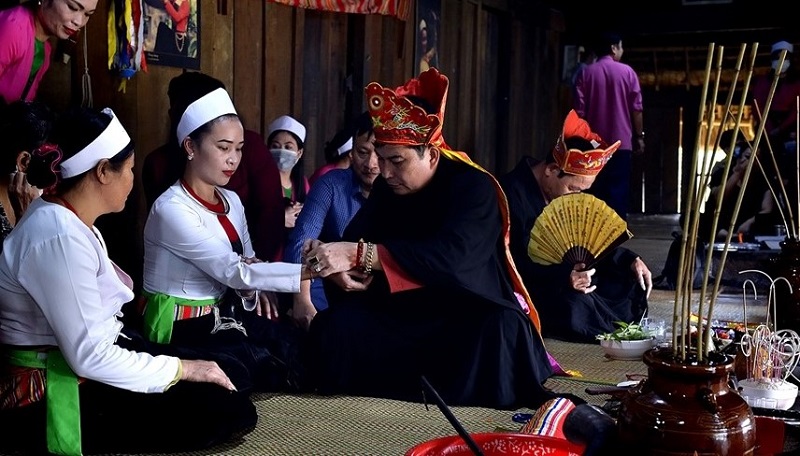
According to Vietnamese folklore researcher Dang Hoanh Loan, Mo Muong Ritual is considered a precious cultural heritage of the Muong ethnic group that is in danger of being lost.
“This art form is usually performed by Thay Mo, or shamans, who play an important role in the spiritual life of the Muong ethnic group in northern Vietnam,” he explained.
“It is believed that Muong people will be protected and blessed by their ancestors through Mo Muong rites on important occasions such as childbirth ceremonies, building a house, or funerals,” he added.
A complete Mo Muong ritual usually consists of three important elements: the “Mo words,” the worship ritual, and the Mo practitioner.
Thay Mo has always had a great reputation among his people thanks to their important position. Believe it or not, the Mo practitioner is considered a “living treasure” of the Muong ethnic minority, capable of remembering and talking about the history of this ethnic group vividly and accurately through thousands of rhymed verbalisms.
| The gong performance is ussually performed in a Mo Muong Ritual of Muong ethnic minority. Photo: Quan doi Nhan dan Newspaper |

Depending on different rituals such as funerals, praying for peace or celebrating a new home, among others, Thay Mo often recites different “Mo words”, which are often taught among Mo practitioners by word of mouth. Among them, the epic “De dat – de nuoc” or “the births of land and water” must be the most renowned one”.
Often read at funerals, the epic includes tens of thousands of verses, telling about the origin, history, and development of the Muong ethnic group, starting from ancient times until now.
It is recognized as a valuable work of folklore in many aspects such as literature, ethnology, linguistics, and folk art… by local folklorists, containing the entire perspective on life and world of the Muong ethnic group in Vietnam.
In 2008, this work was performed and recorded on DVD and published in book form.
Earlier, the famous epic was also translated into the national language and taught in high schools in Vietnam as a valuable folklore work, equivalent to the Kieu Tales by Nguyen Du.
“Over time, the Mo Muong ritual has contributed to the formation of the good lifestyle and rich soul of the Muong ethnic people, as well as helping to protect and refine the Muong culture in all historical periods,” folklore researcher Dang Hoanh Loan affirmed.
The Mo Muong heritage is largely practiced throughout the Muong ethnic communities who live in six localities in the northern and central parts of Vietnam, namely Ninh Binh, Phu Tho, Son La, Thanh Hoa, Dak Lak, and Hanoi.
It is one of the newly-recognized national intangible cultural heritages listed by the Ministry of Culture, Sports and Tourism this week, which includes folklore ceremonies, festivals, and performances.
The intangible cultural heritage items have been divided into four categories of traditional handicrafts, traditional festivals, social practices and beliefs, and folk knowledge.
According Ministry of Culture, Sports and Tourism, for an intangible cultural heritage to be inscribed into the list of national intangible cultural heritages, it must meet criteria representing community-based and locally-based identity, reflecting cultural diversity and people’s creativeness, being passed through generations, being able to be revived and last for long and receiving public consensus, nomination, and protection commitments.
The recognition is part of the roadmap to develop the profile of the national intangible cultural heritages to be inscribed on the UNESCO list as the world’s intangible cultural heritages in urgent need of protection.
| The space of Da Trach Temple in Khoai Chau District, Hung Yen Province. Photo: Hung Yen Tourism |
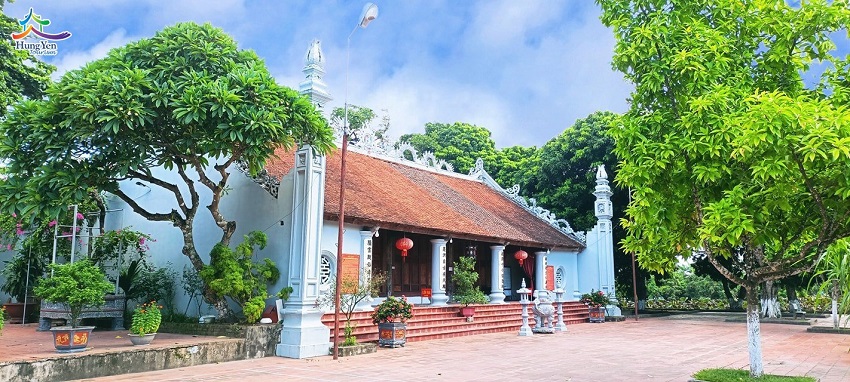
The list also includes two festivals from the temples of Ky Yen and Nguyen Trung Truc, in the southern provinces of Binh Duong and Kien Giang, respectively, and another two from Da Trach and Da Hoa, in the northern province of Hung Yen.
There are also Thai Binh Song Festival in Nam Dinh Province and the Cham Islam Life Cycle Ritual in An Giang Province; the new rice celebration of the Raglai people of Ninh Thuan Province and the Lunar New Year festival of the ancient city of Hoi An, Quang Nam Province.
The post Mo Muong folk performance ritual becomes national intangible cultural heritage appeared first on Vietexplorer.com.
View more from VietExplorer:
Ninh Binh trains firefighters in fire fighting and preventionLotus pond in Uncle Ho’s hometown
Heavy downpour causes severe traffic congestion in Hanoi
Activities to be held nationwide to celebrate birthday of President Ho Chi Minh
Conquering Khang Su Van mountain
Vietnamese publishers give free e-books to readers
Housewife shows off artistic gowns made from vegetables
Vietnam’s Hue city gets ready to reopen for tourists
Vietjet Air resumes all domestic routes
Quang Ninh considers offering free tickets to Ha Long Bay
Vietnam issues safe tourism instructions
Hanoi relics reopen doors to visitors from May 14
Vietnam flies over 300 citizens from Russia home
Video: Notre-Dame Cathedral in Paris Catches Fire
Opening stages of Miss Vietnam Tourism 2020 get underway
Vietnamese designer debuts first COVID-19 fashion collection
Golden Kite Awards 2019 honours best films
Try fragnant rice cooked in stone pots in HCM City
Hue offers 50% discount on sightseeing fees to stimulate tourism
A land of diverse cultural features of ethnic groups in spring


Nhận xét
Đăng nhận xét